The Human Condition- Philosophical Lessons From Genesis
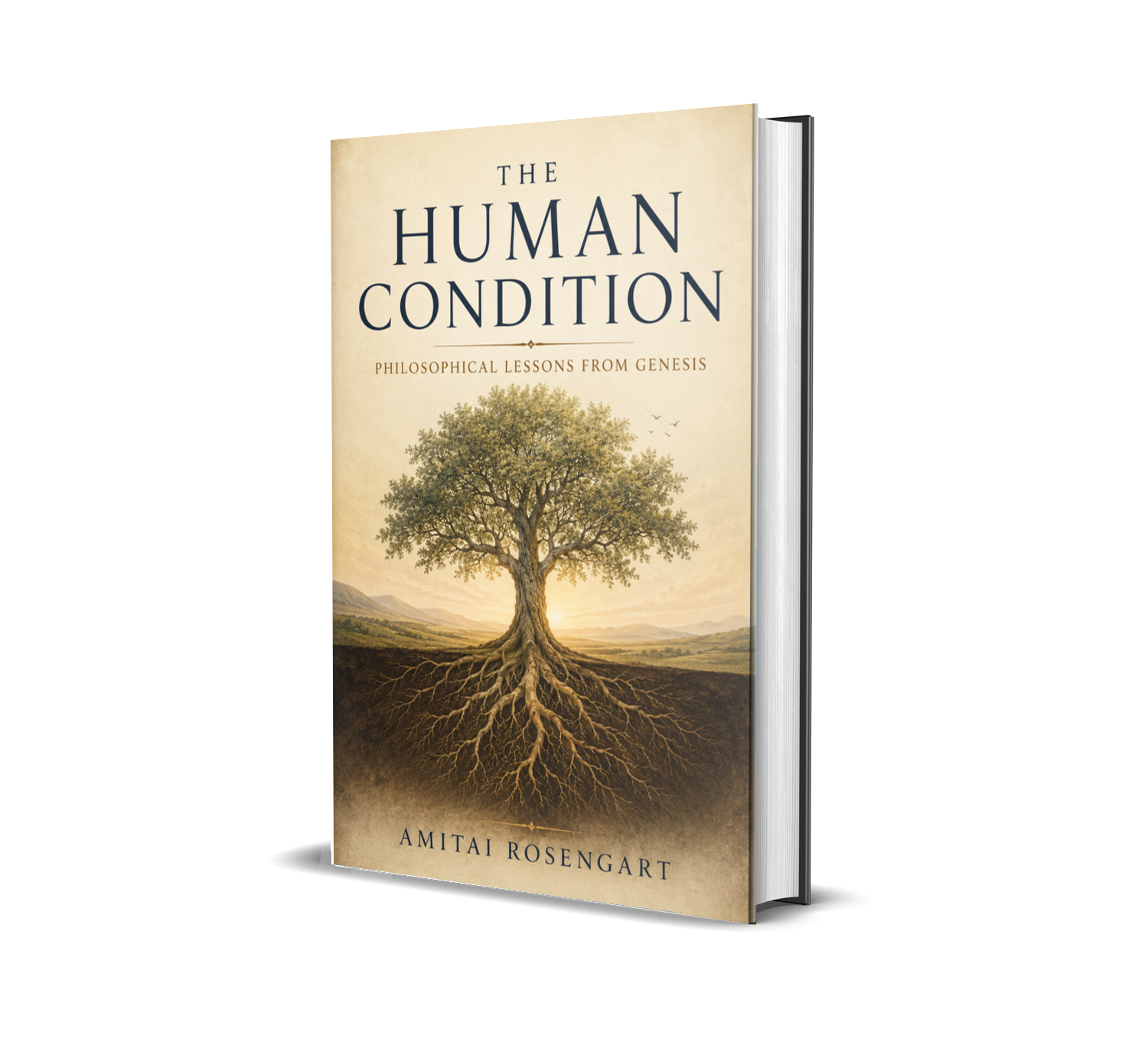
What can the first stories of Genesis still teach us about being human?
In The Human Condition: Philosophical Lessons from Genesis, Amitai Rosengart returns to Adam and Eve, Cain and Abel, Noah, and the Tower of Babel — not as distant religious stories, but as timeless tragedies about the human condition.
These ancient stories speak about questions that remain painfully familiar. What happens when trust breaks between parent and child? Why does comparison so easily become resentment? How should a person act when he sees danger before anyone else is willing to see it? Why does the human dream of unity so often turn into control, fear, and fragmentation?
Rosengart offers a philosophical reading of Genesis that moves from the individual to the family, from the family to society, and from society to civilization. Adam and Eve become a story about childhood, shame, knowledge, and independence. Cain and Abel become a story about recognition, rejection, violence, guilt, and the burden of living with one’s own actions. Noah becomes a story about foresight, responsibility, catastrophe, and survival. Babel becomes a story about language, power, ambition, and the limits of collective human projects.
This is not a traditional religious commentary, nor an argument against religion. It is a philosophical investigation into why these stories endure. The book asks us to read Genesis not only as a sacred text, but as a mirror — one that reflects the structures of human life that remain unchanged beneath the surface of history.
Technology changes. Institutions change. Language changes. But shame, fear, pride, resentment, responsibility, love, ambition, and the need for meaning remain.
The first stories of Genesis endure because they do not merely tell us where we came from.
They remind us who we are.
Buy it now at your local Amamzon store
Other Publications